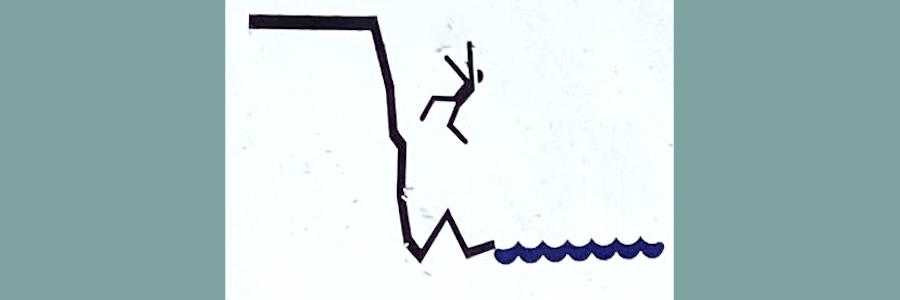

When I started this project, I was sure that Slips would be the largest category, and it’s true that there are a whole bunch of Slip signs out in the world (most professional mops seem to come with one). Falls, however, might be even bigger, because while the signs aren’t quite as widespread, it turns out there are a lot of ways to fall. And I mean a LOT.
One note before we jump in (pun intended): Fall signs tend to be placed pretty close to cliffs and edges. Since I have a healthy respect for heights and prefer not to venture too close to the dangerous drop indicated on the signs, many of these were photographed at a distance, so I apologize for the blurry/pixelated ones.
It’s hard to choose where to start with this category! As with Slips and Trips, we’ll encounter some repeated figures in different situations, and a wide variety of scenarios. Let’s begin at the beginning, with what I like to call the Pre-Fall. These are the figures who are courting danger, and these signs often appear a little distance back from the fall hazard, or sometimes next to a more graphic Fall sign.
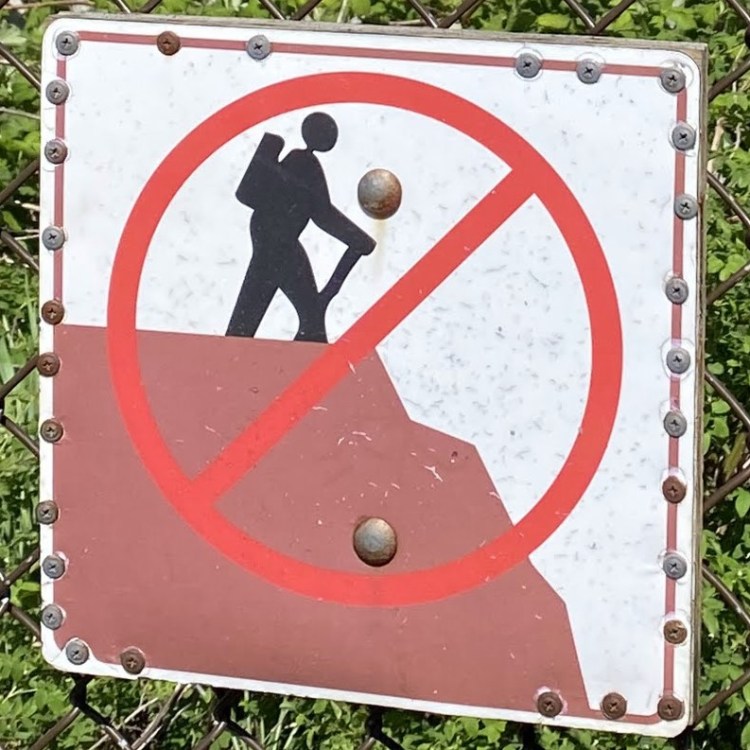
First there are the ones who are climbing over a barrier or guard wall, in order to fall:
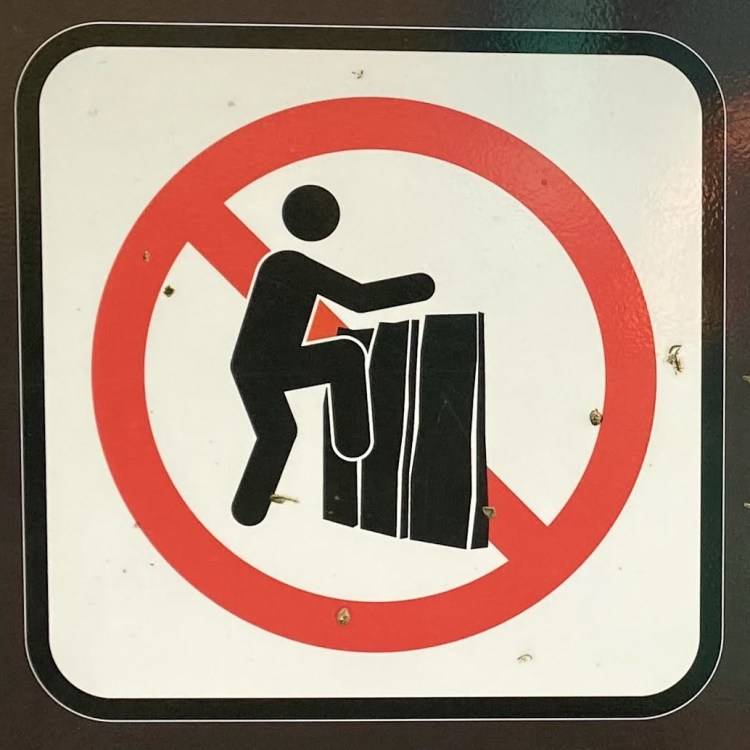
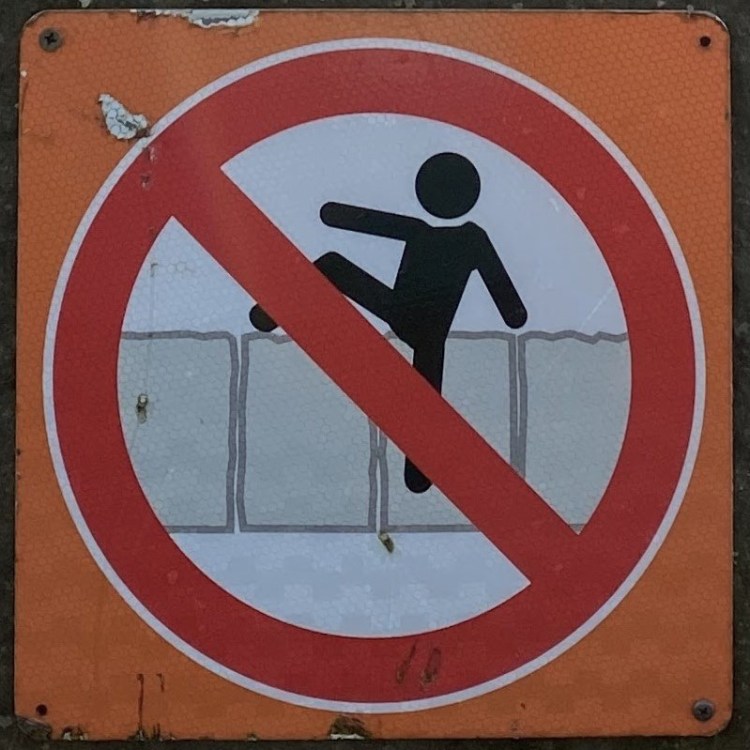
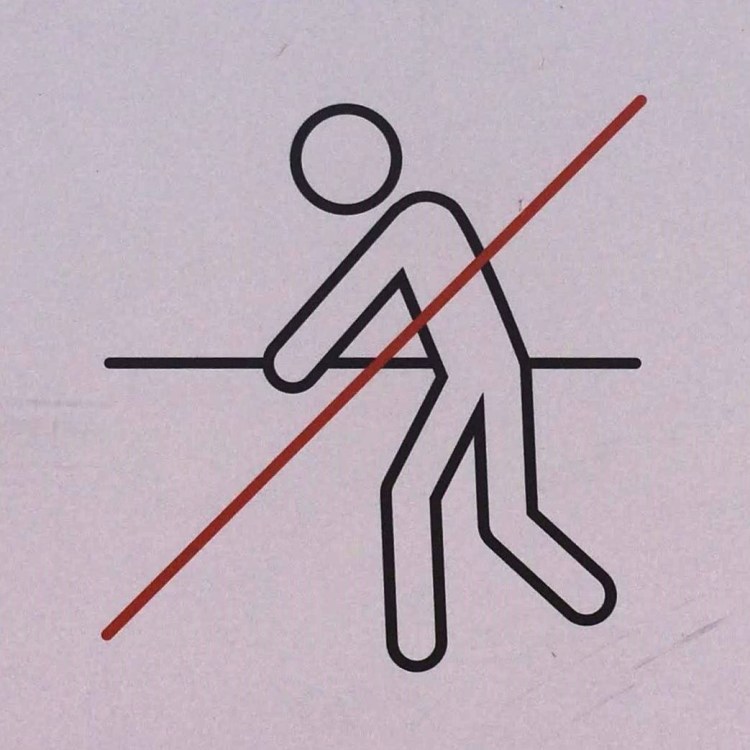
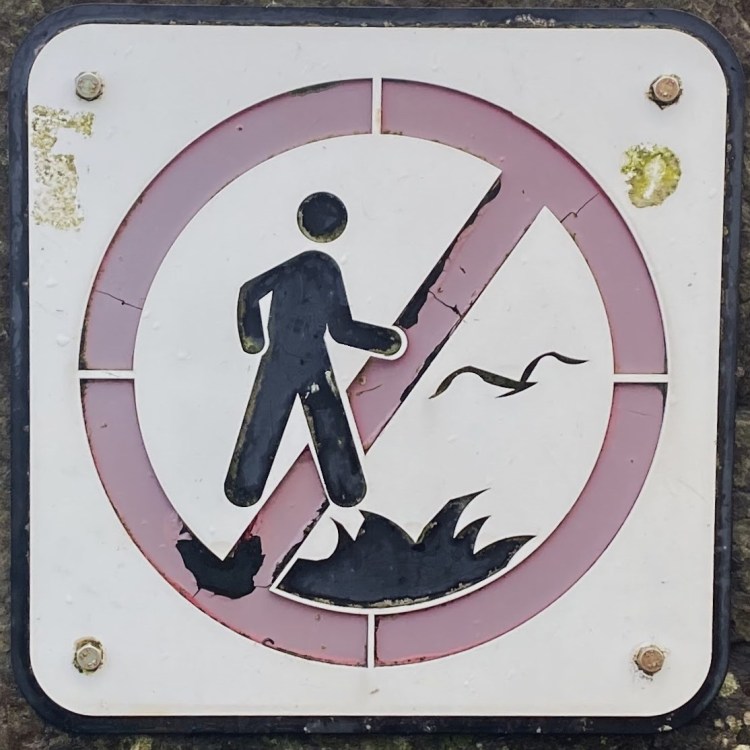
Then we have the ones who have already crossed over and are happily walking toward the edge, listening to birds and oblivious to the cliff in front of them.
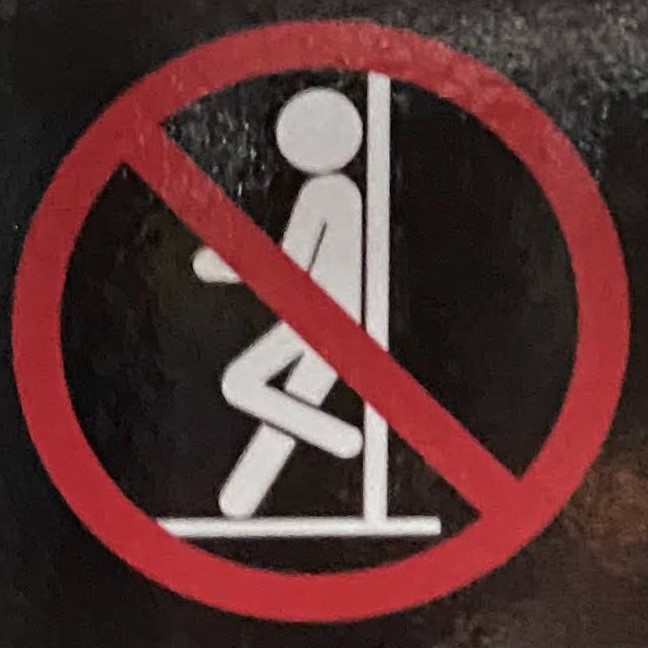
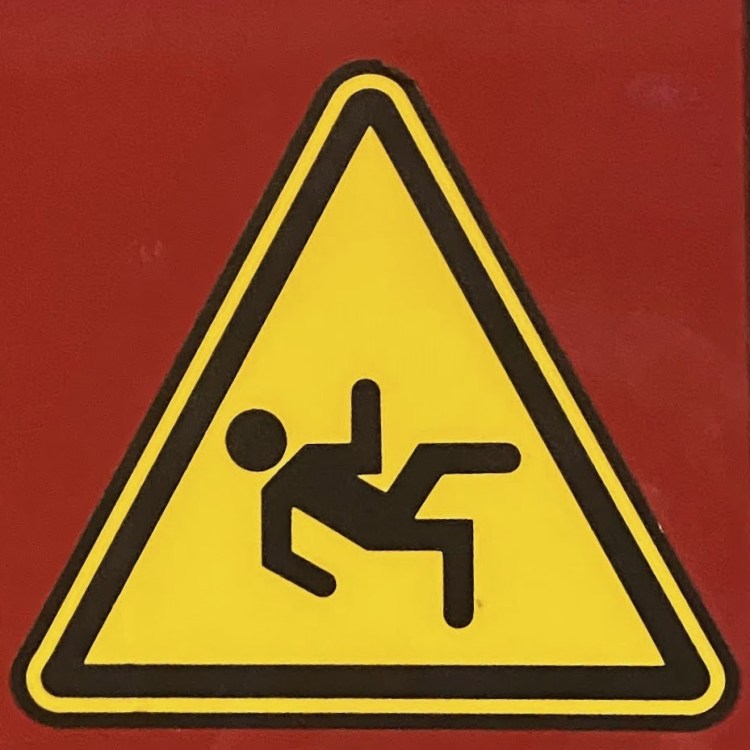
They remind me of the infamous subway rider who leans back against the doors, which often comes with a before and after version:
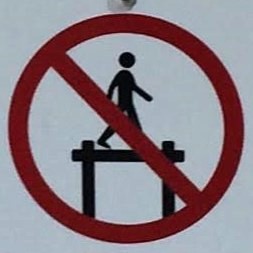
Then there are the ones who clearly have a death wish, like this one who is walking on what, according to the sign text, is called a groyne:
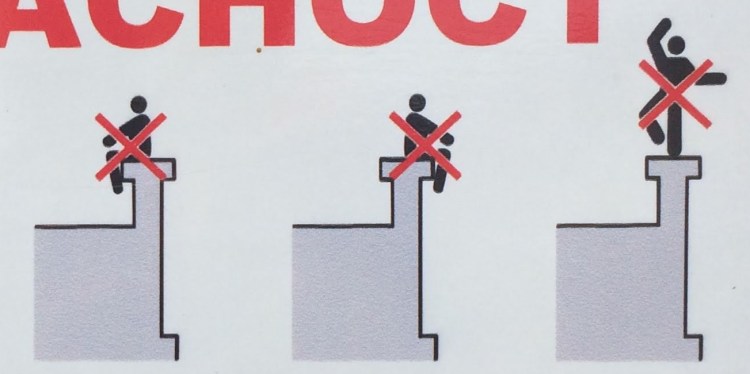
Or this one who starts off sitting and posing for a photo, then switches around to sit and admire the view, then decides to start doing yoga (really, you’re asking for it at that point).
Then you have this figure, which has walked right up to the edge but is being a little more cautious. This one most often appears near water, but occasionally around cliffs. Looking over the edge like this is definitely a bad idea, but they aren’t actively falling yet, so I suppose it could be worse.
We’re very close to the edge now. Very rarely you’ll find a figure that’s in the act of falling, but could still theoretically save itself.
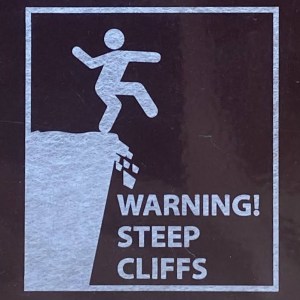
But take that same figure and adjust the orientation and positioning a little, and that slim percentage chance drops to about zero.
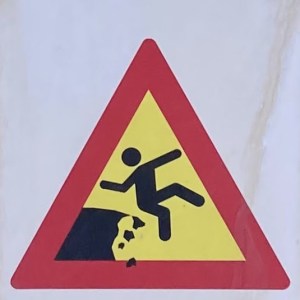
Side note: does that figure look familiar? Of course it does, if you read Slips and Trips.
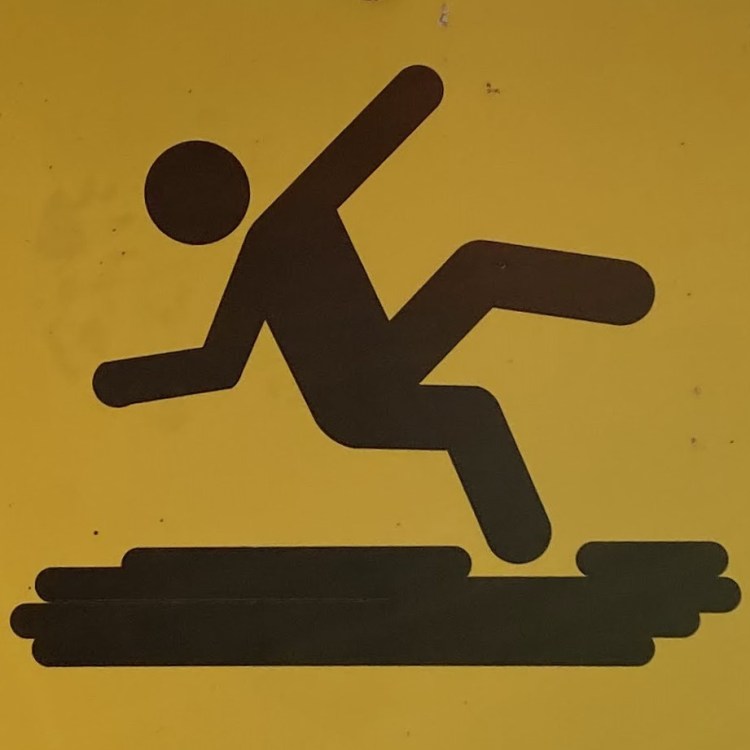
Slip 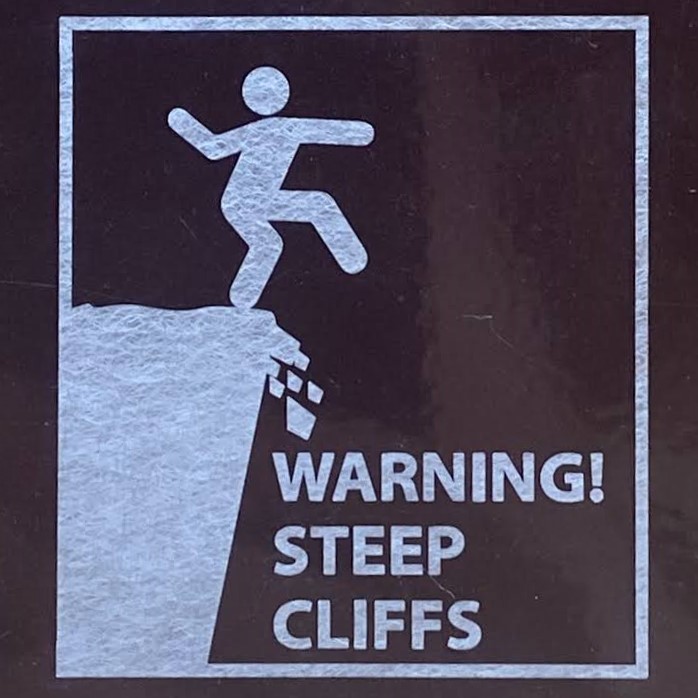
Early fall 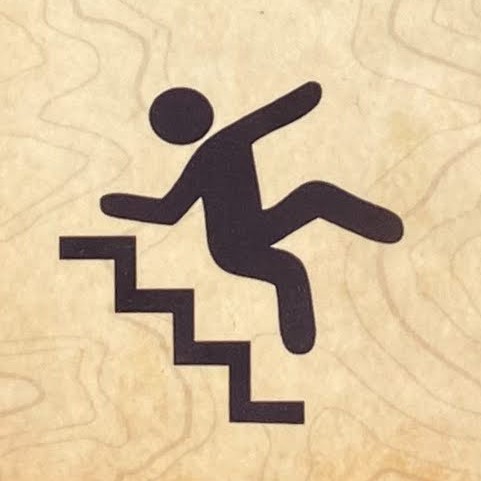
Slip/fall 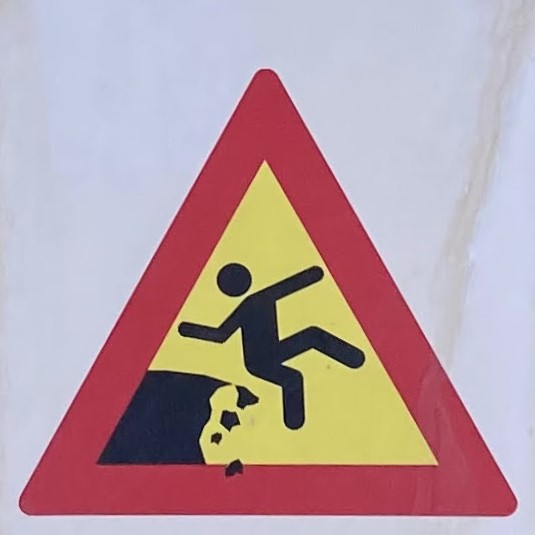
Active fall
Now that we’ve arrived at actual falls, let’s explore the various kinds of falls. You can fall feet-first in a slipping sort of way, like the figure above:
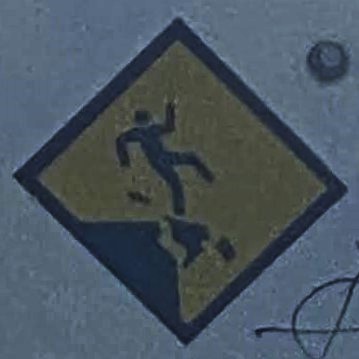
Blurry sign = extra-scary edge 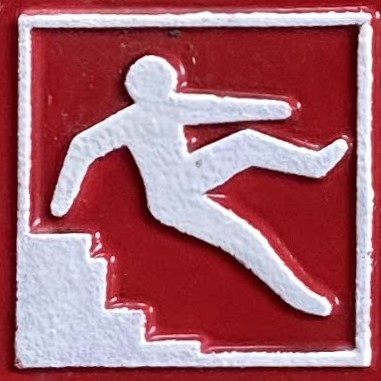
This would have been a slip but it was next to a different slip symbol, so it definitely indicates a fall 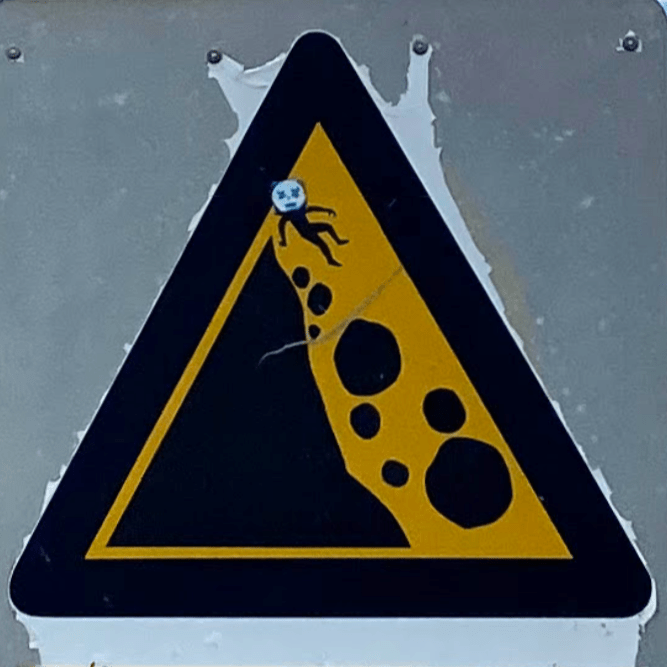
Someone added a sticker and I respect that
You can get a run at it, which is always fun but also makes it look intentional, and why are you warning me about accidents by showing my someone who’s clearly doing it on purpose. Running into water is especially popular for some reason.
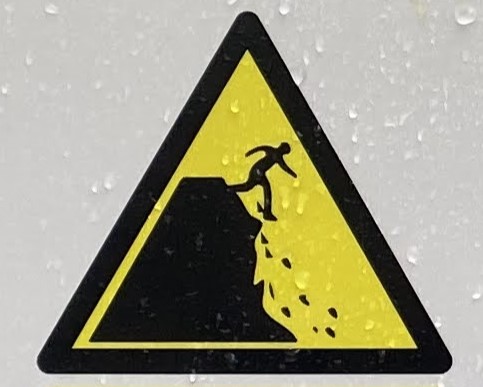
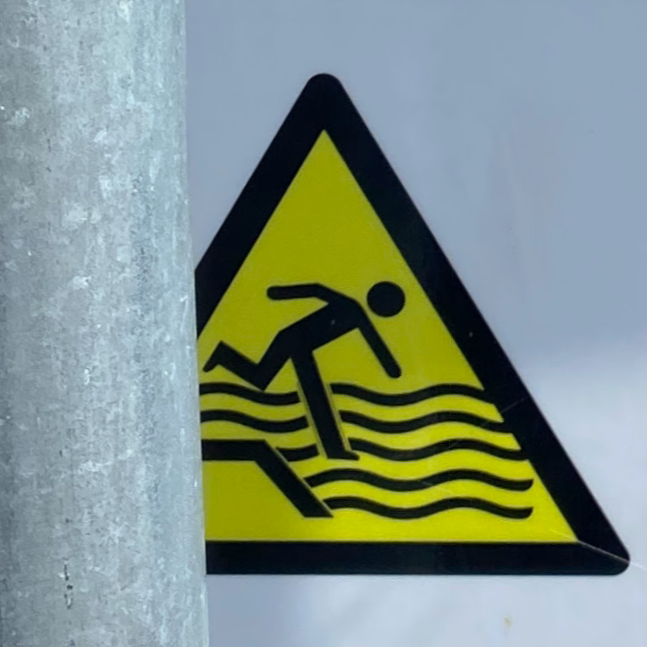
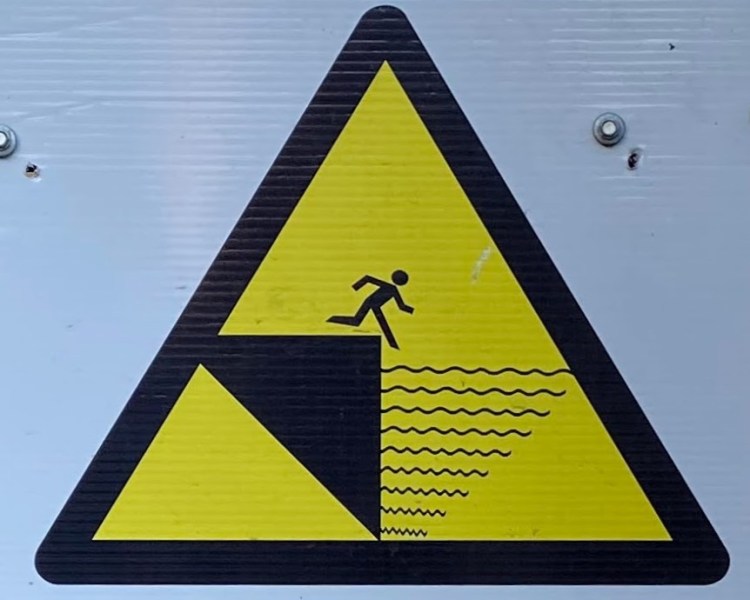
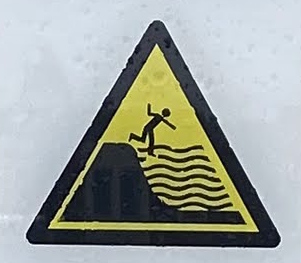
You can also just sort of jump, as appears to be happening here (both arms up always looks more fun).
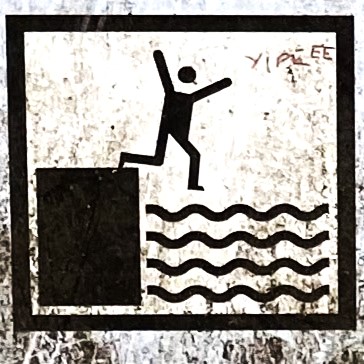
I like the person who added the Yipeee 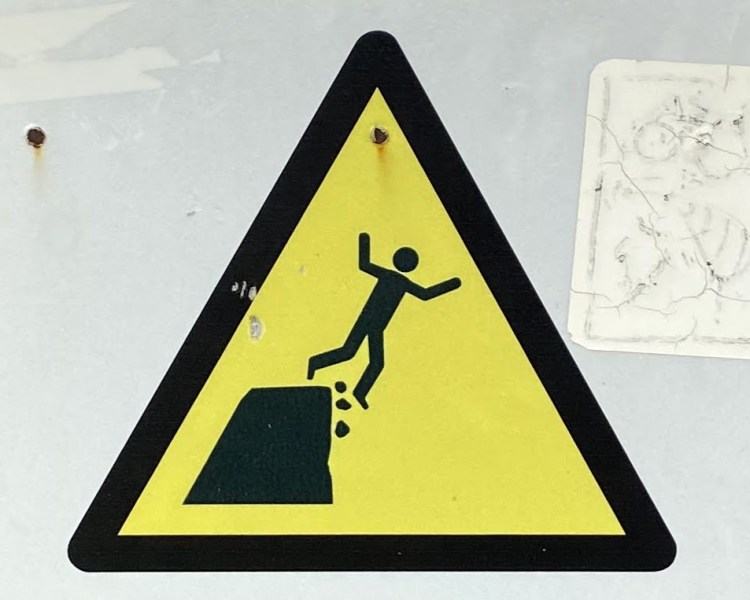
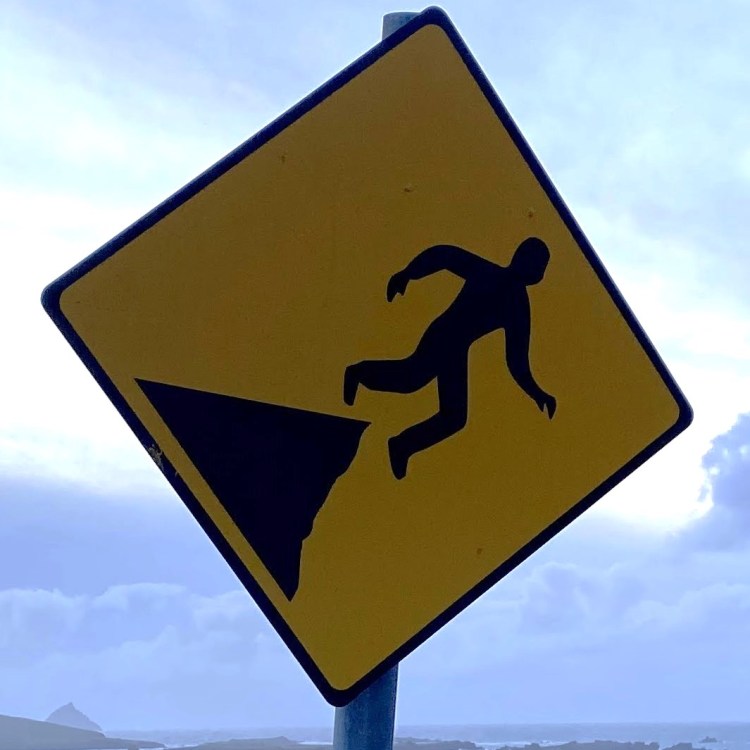
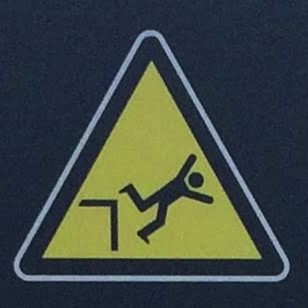
You can go over sideways.
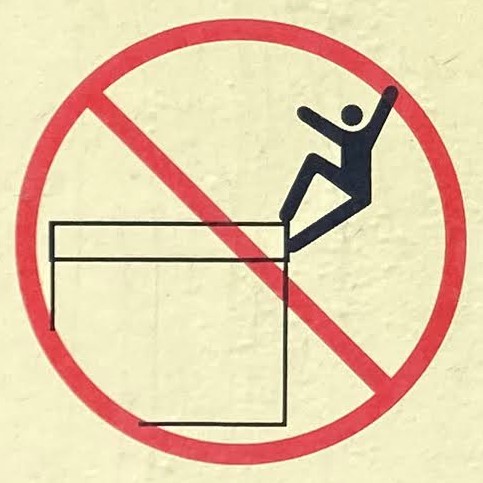
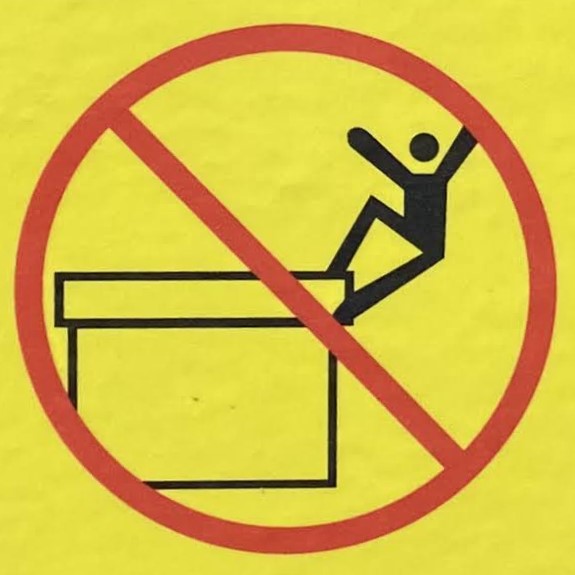
Where did you get the giant box? 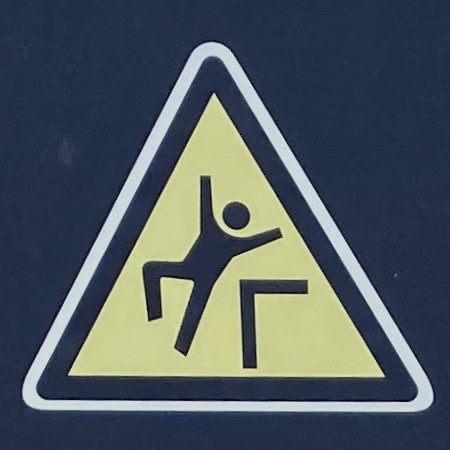
Falling, or dancing next to a table? You choose 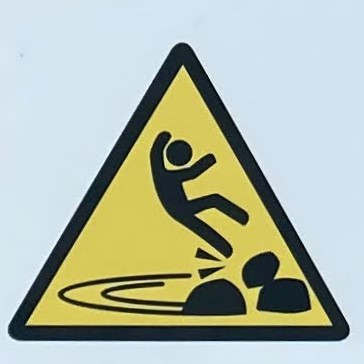
Also kind of a Slip
And of course you can go off the edge backwards, the scariest version. The tamer ones could almost be stepping up, but context insists they’re falling back. The more dramatic ones are downright terrifying.
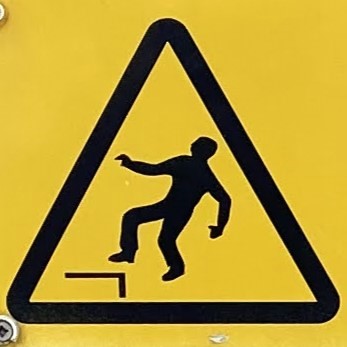
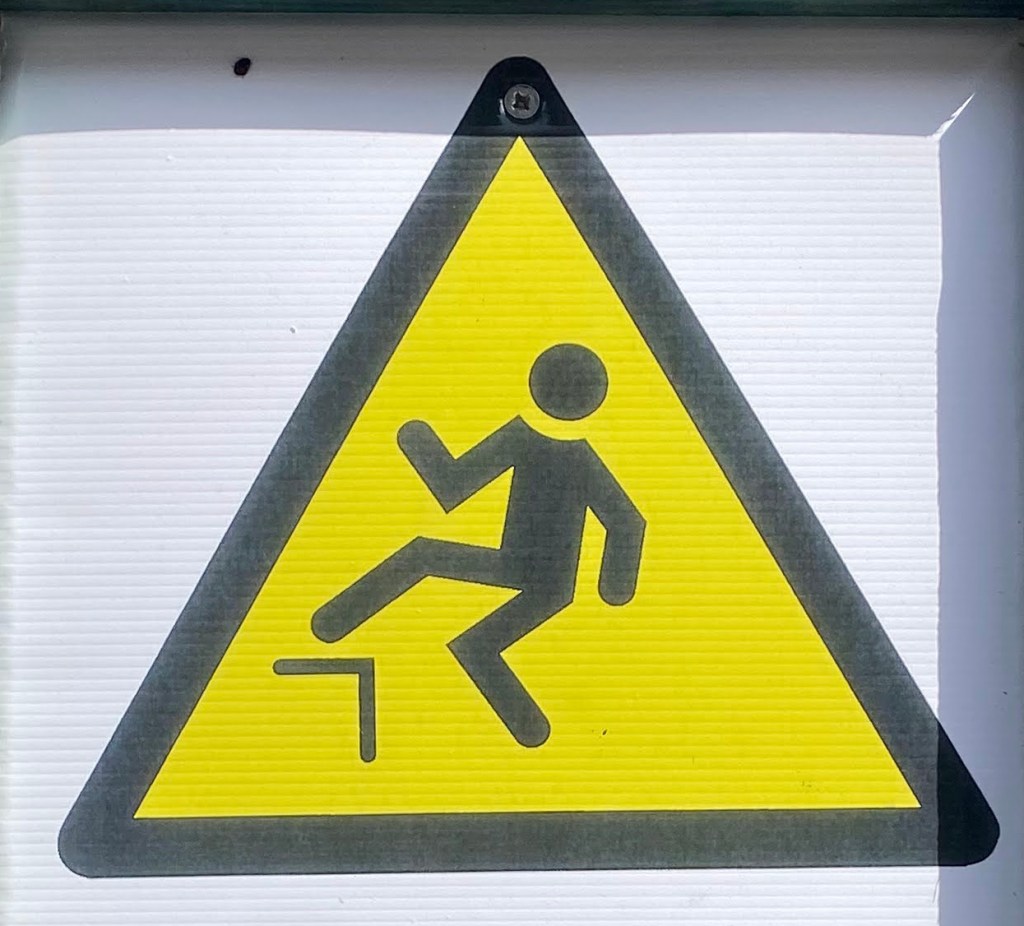
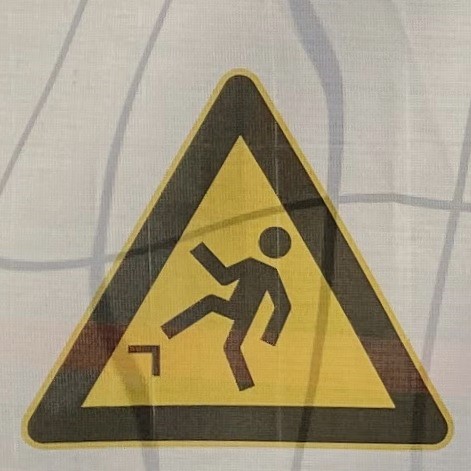
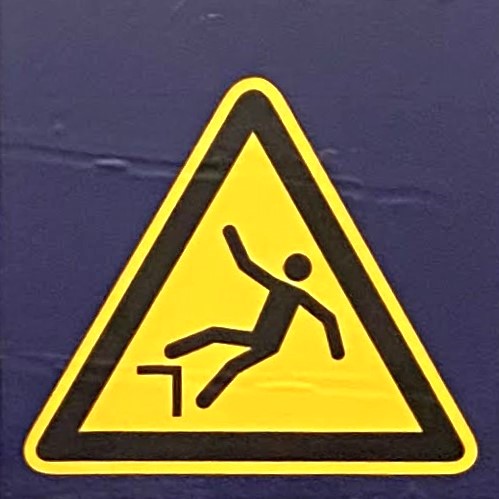
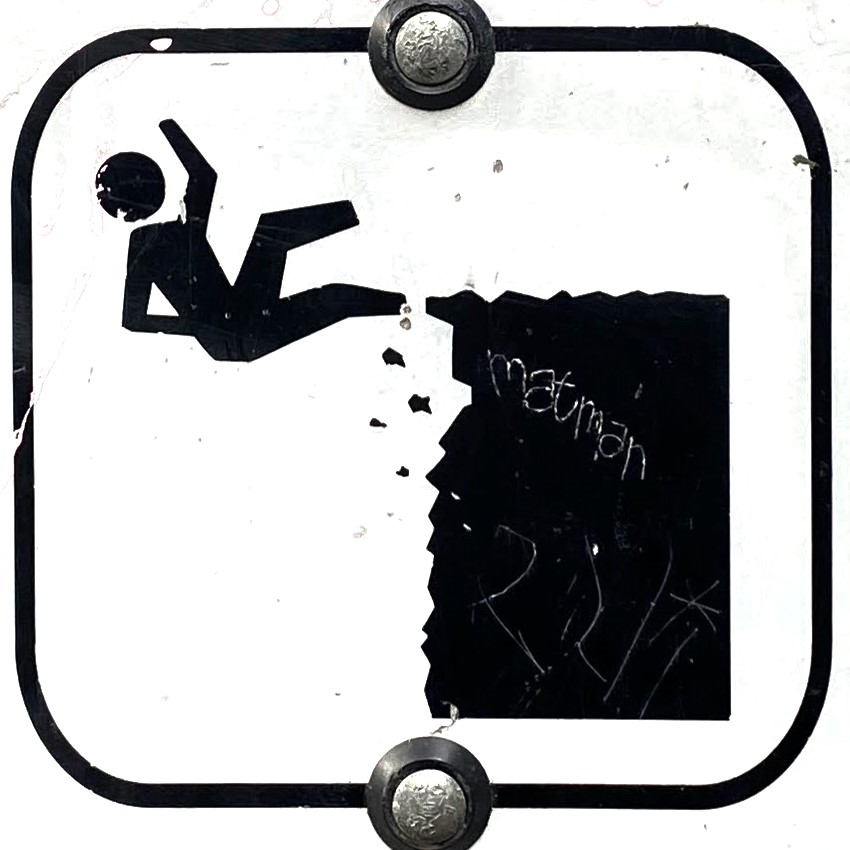
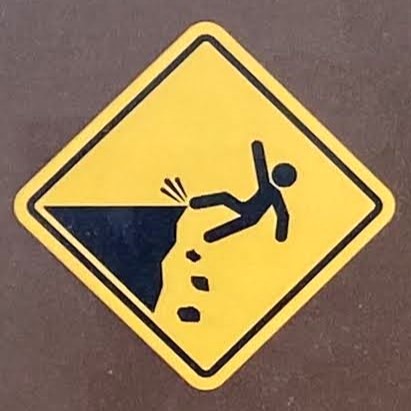
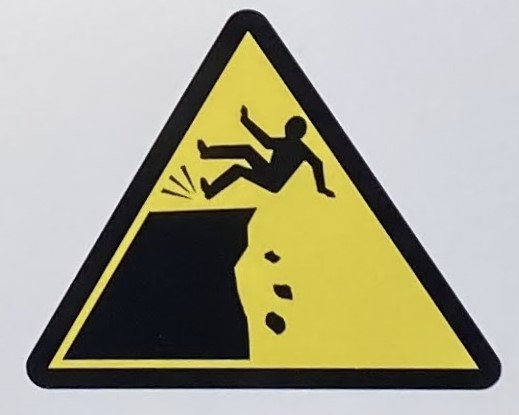
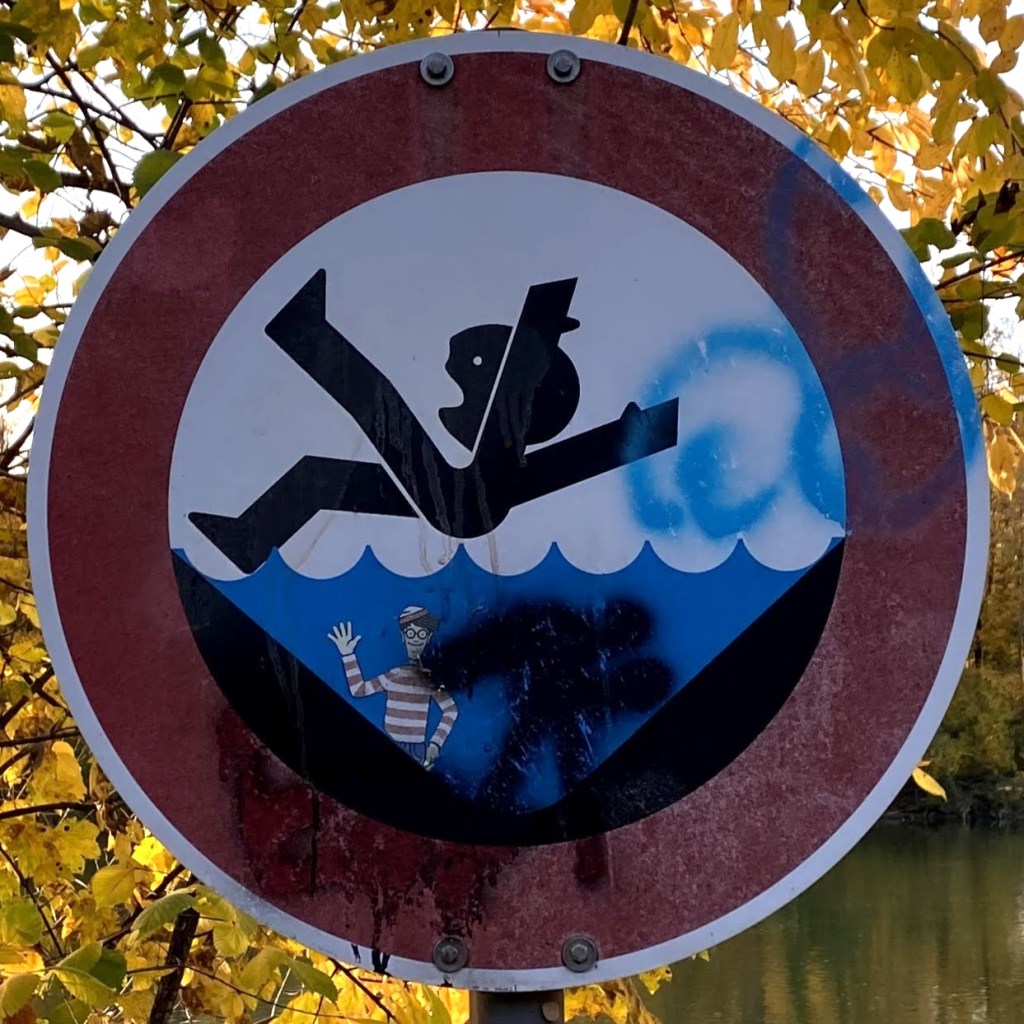
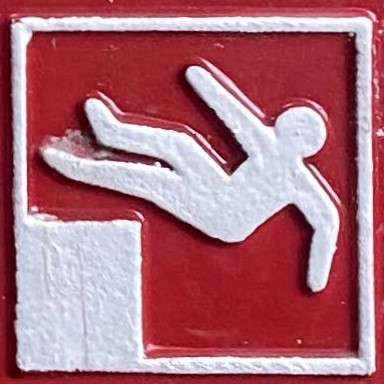
Then there are the ones that are falling through things or into cracks, a special subcategory.
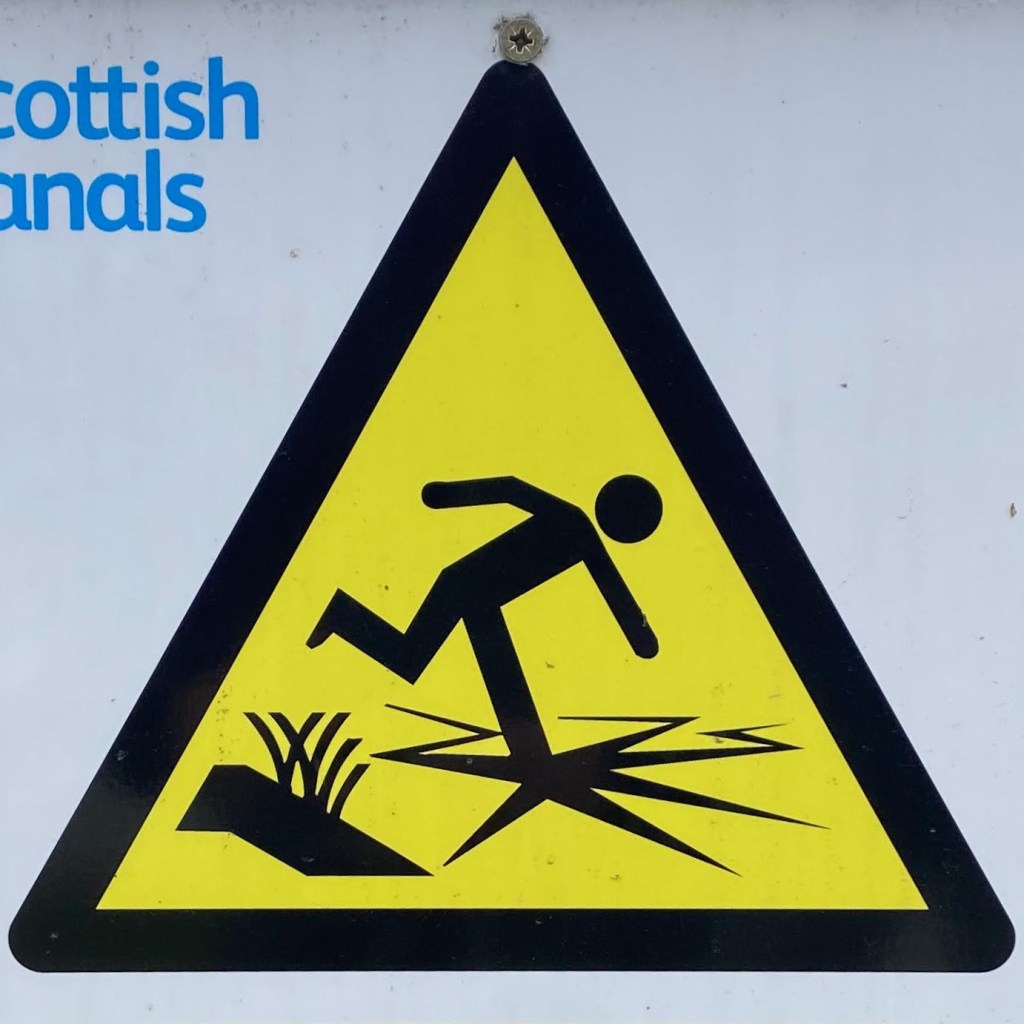
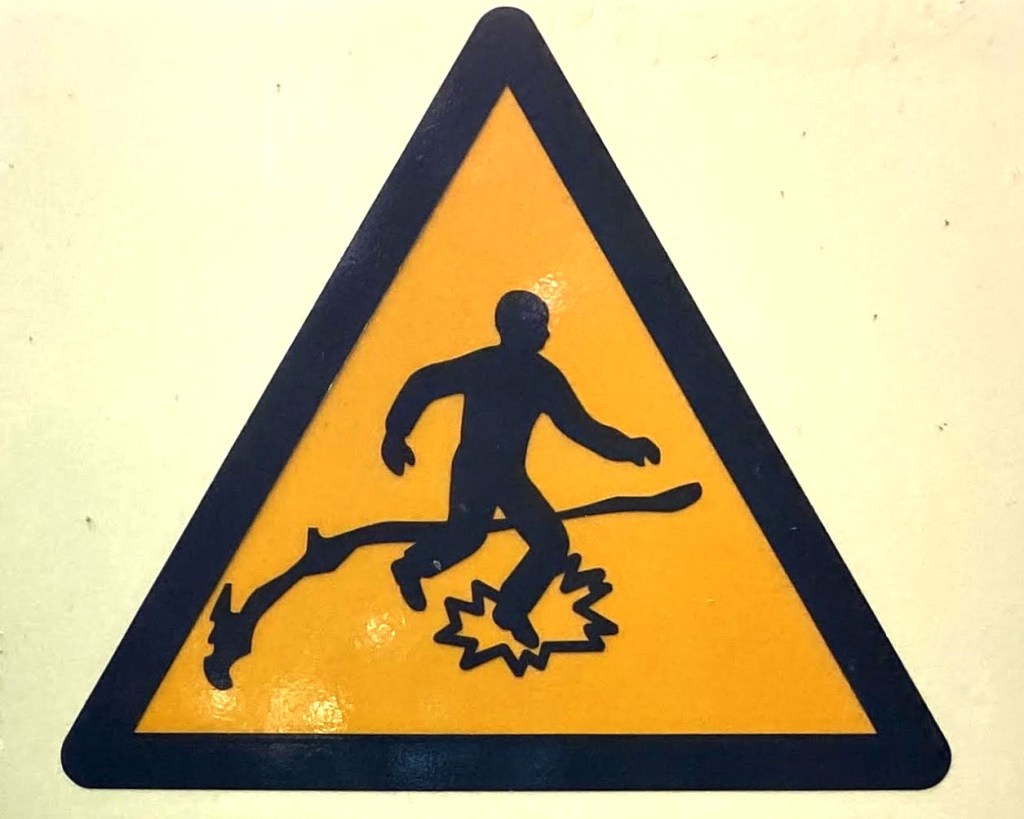
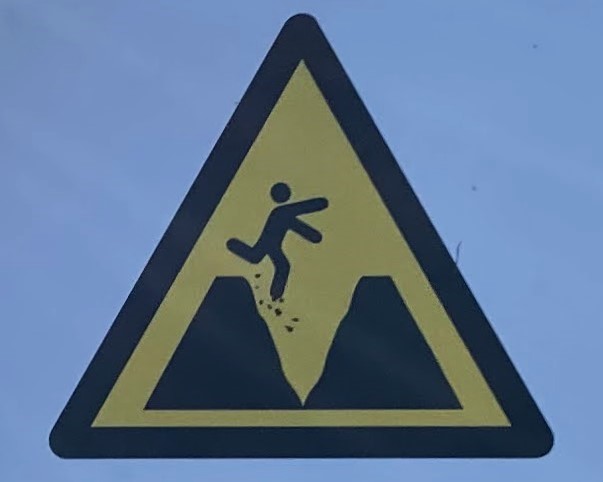
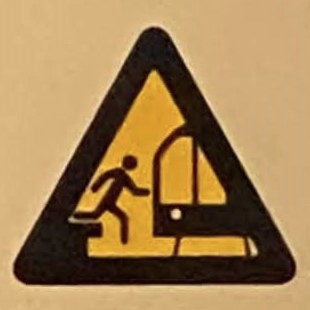
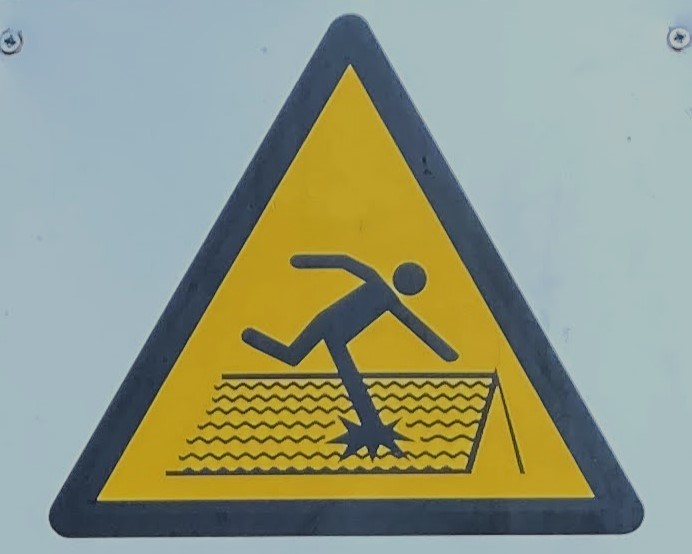
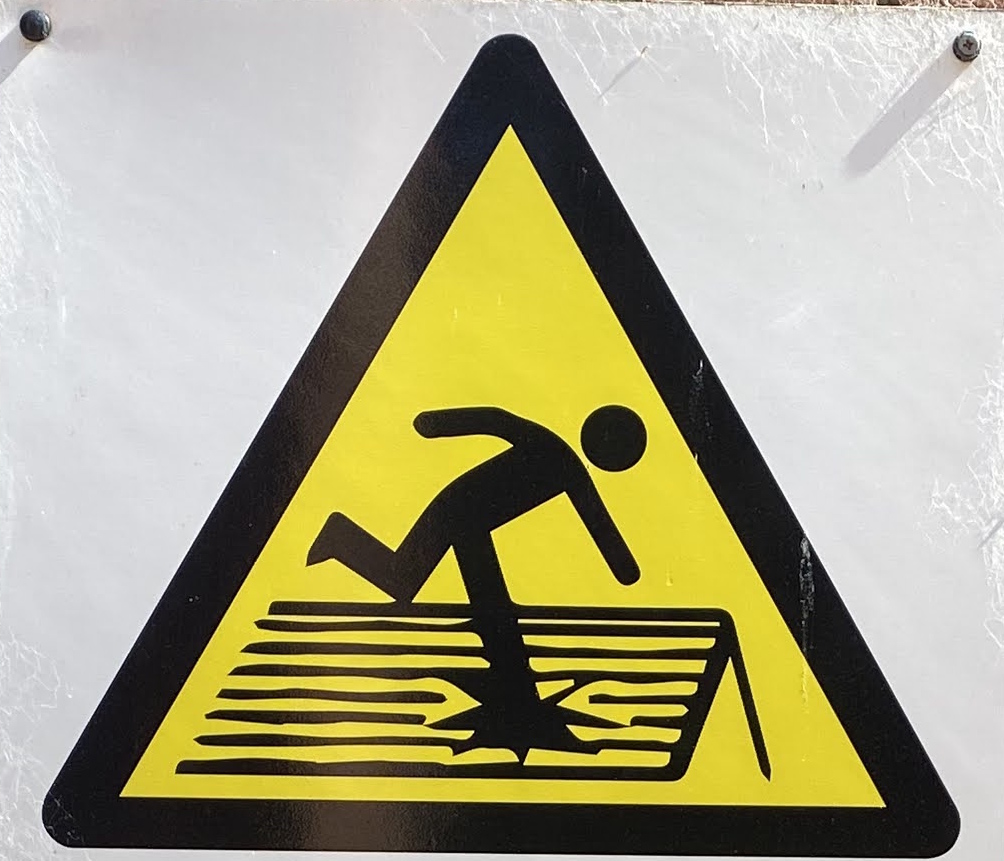
If it weren’t for the text, I would think this one was happily floating in space. It looks like you were walking through thin air before you started this fall, how’d you do that?
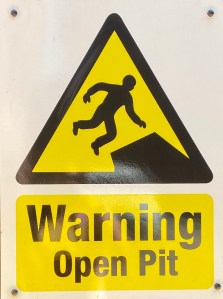
I’m not sure how this one managed to fall from a sitting position, nor how it got so far away from the edge so fast. Also, what kind of edge is that? So many questions.
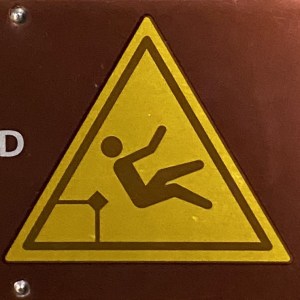
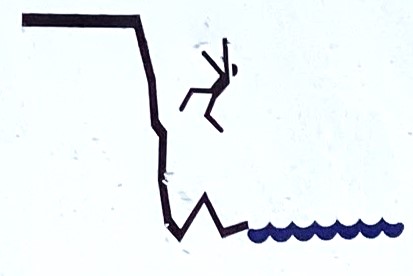
Lastly, there’s the category of completely unsalvageable falls. These are a bit gruesome, brace yourself…
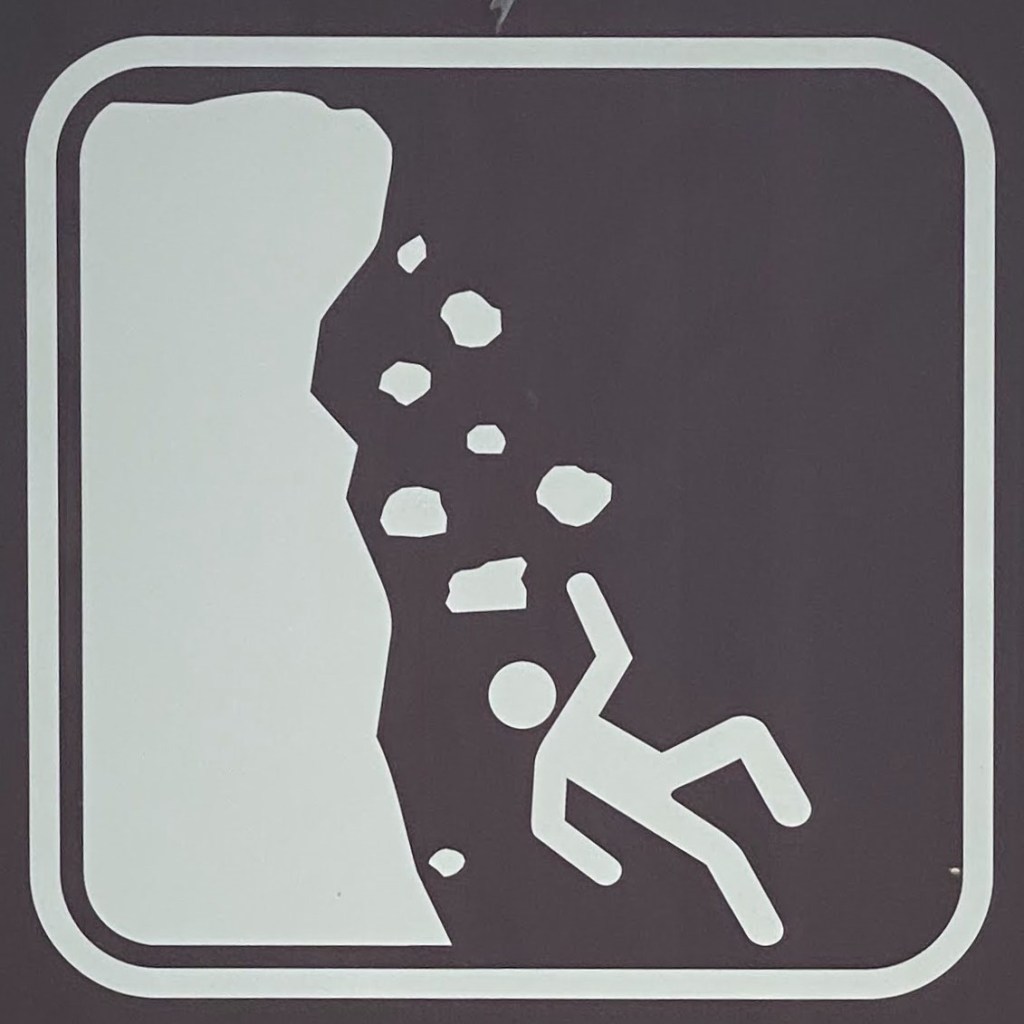
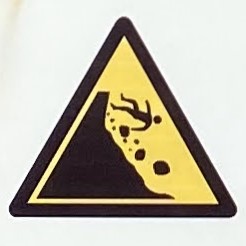
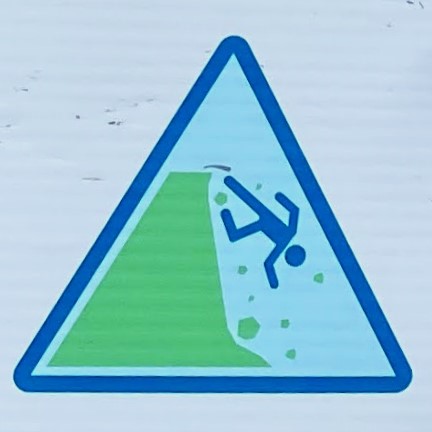
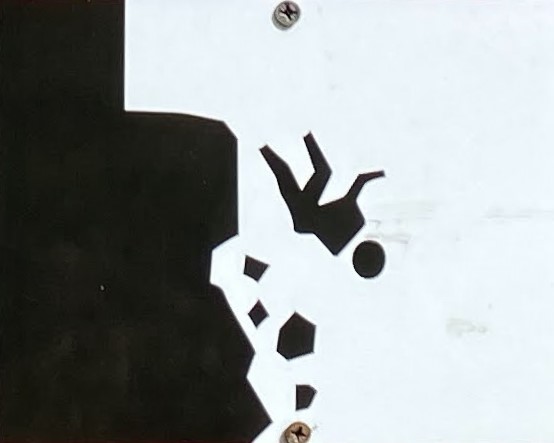
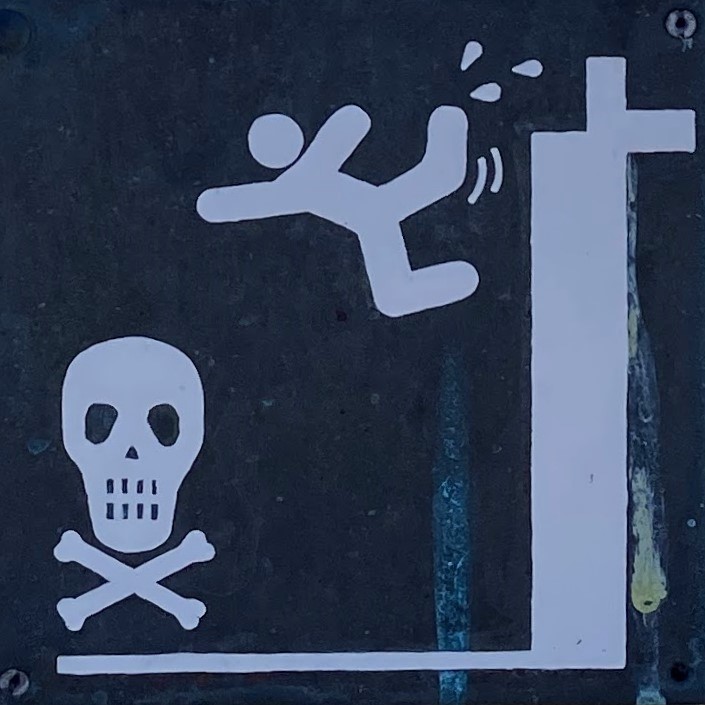
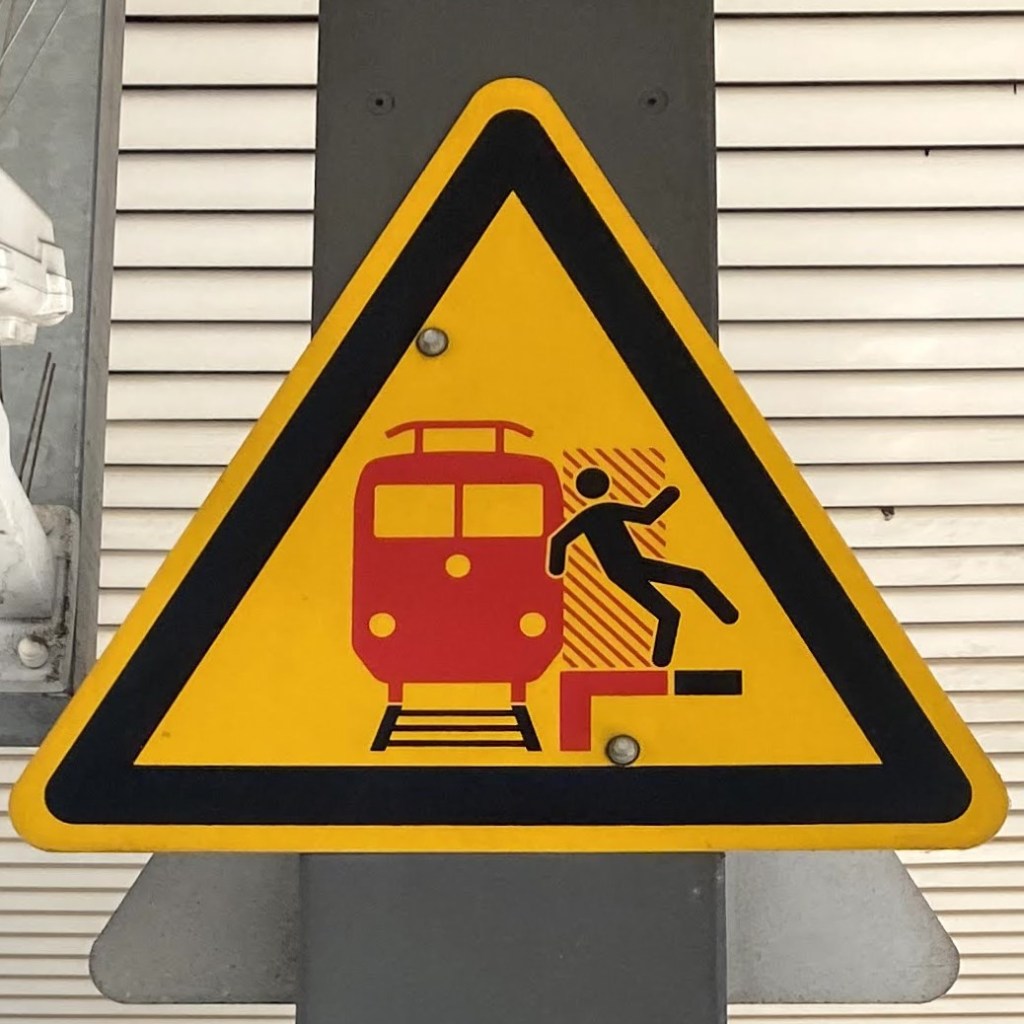
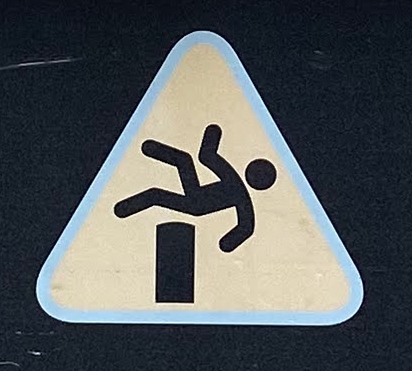
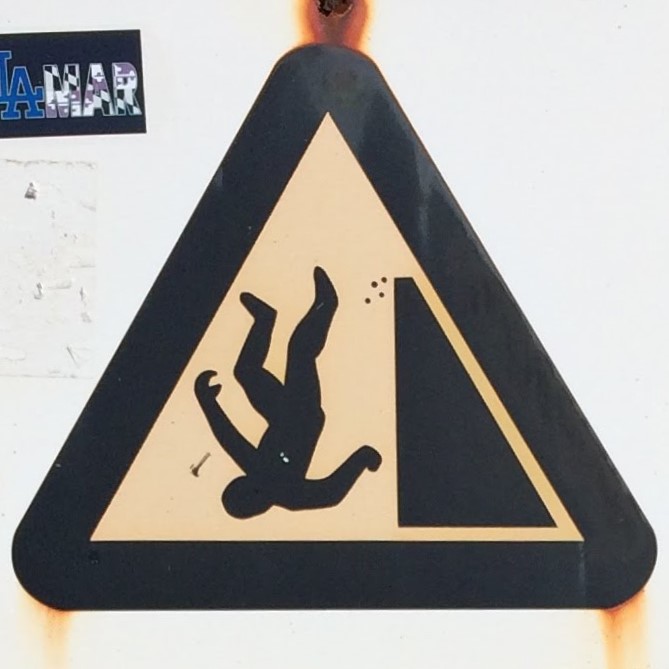
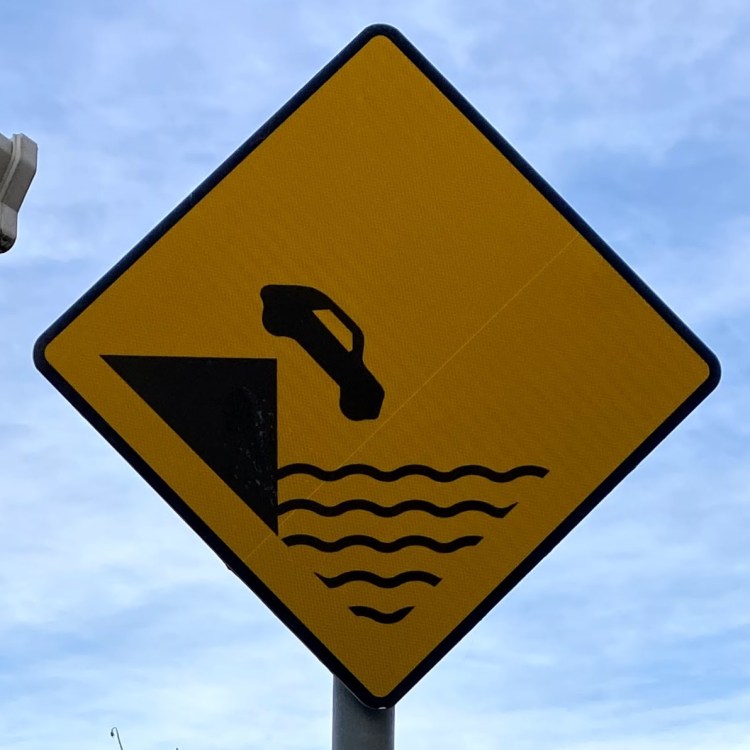
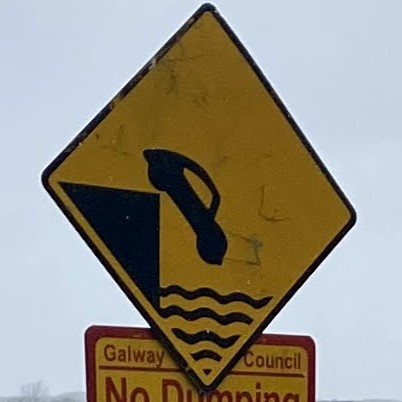
Those are the main categories of human falls, so now let’s look more closely at the subtle differences. To illustrate that, here’s a set of non-human figures! I started gathering pictures of cars falling into water almost as an afterthought, and didn’t really look at them until I started this project. I was really surprised at how different they are from one another. Different kinds of cars, different fall states, different water surface… see for yourself.
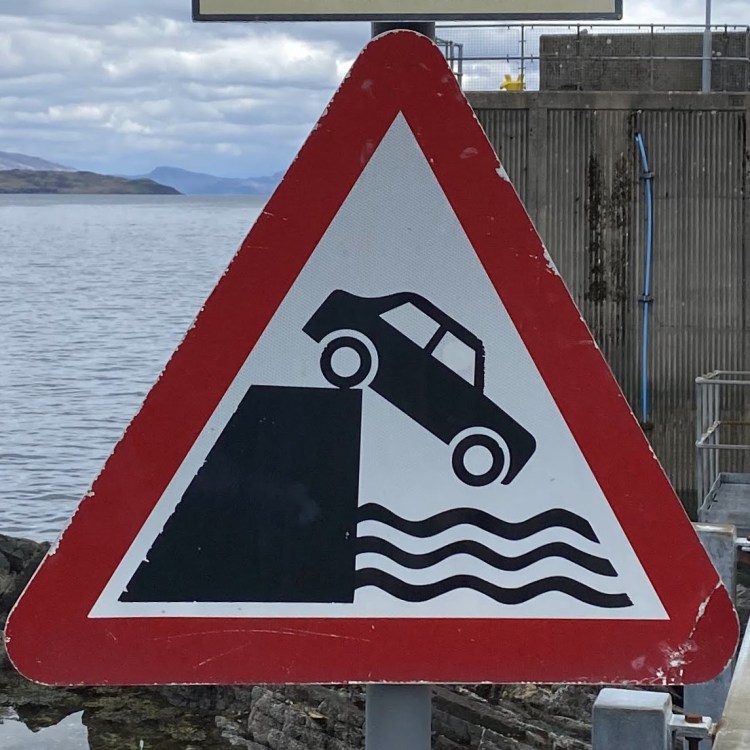
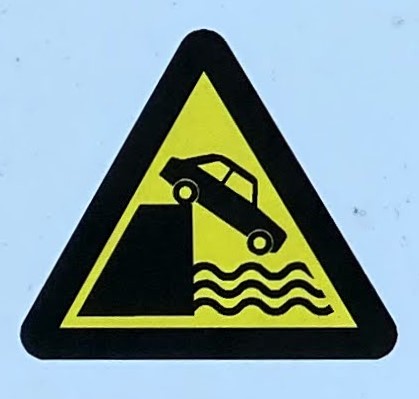
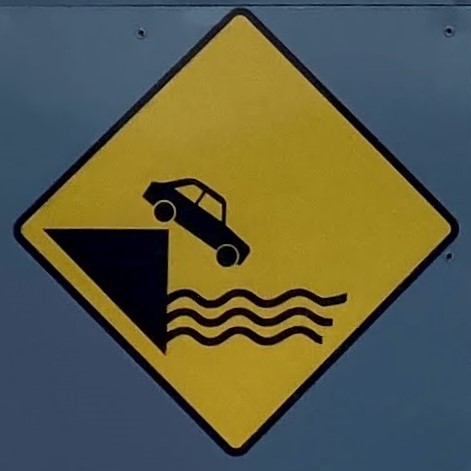
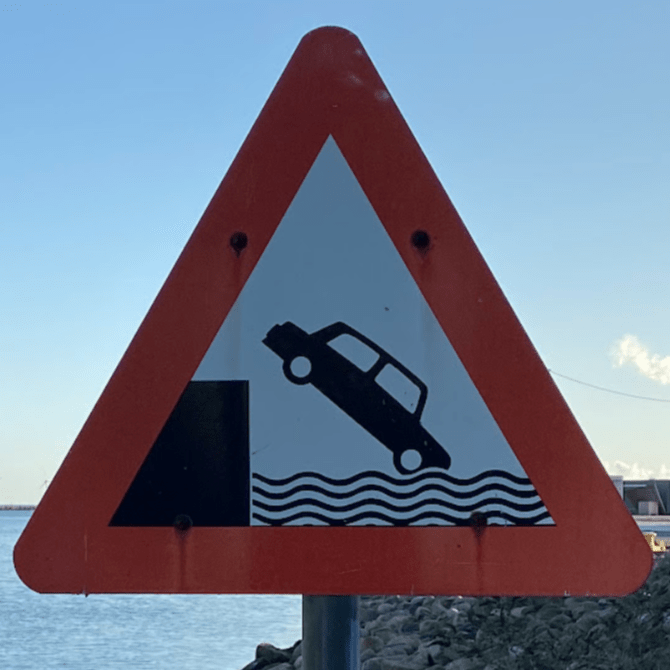
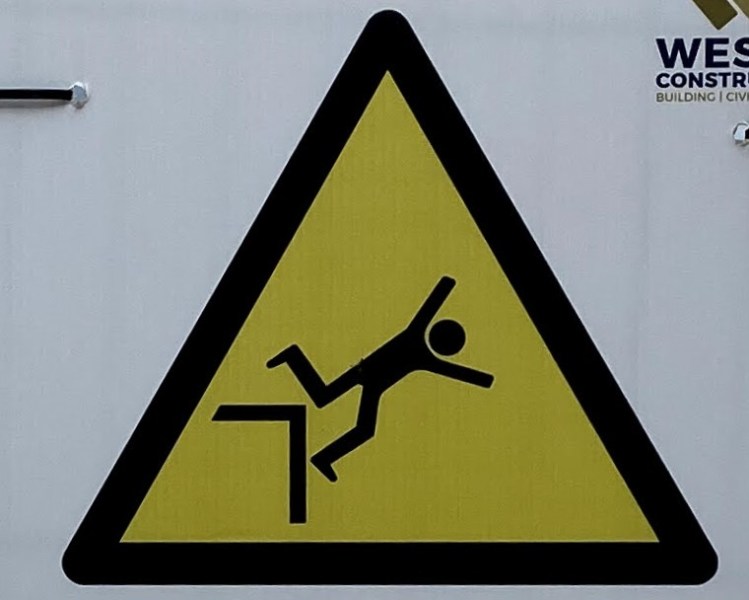
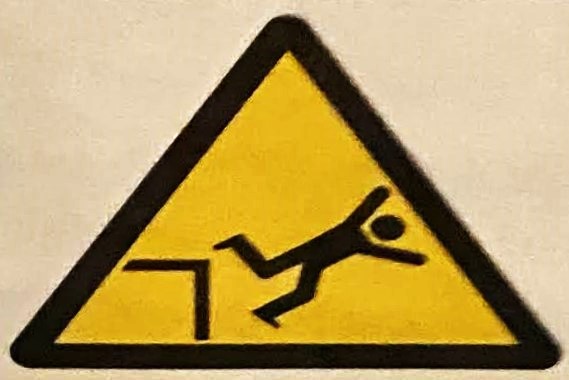
The human figure differences are more subtle, but this one has some nice variety. There are differences in the rounded corners of the figure (knees, ends of arms, shoulders), in the distance between the head and the body, in the relation of the figure to the surface it’s falling from and the border of the sign, and even in the angle of the figure.
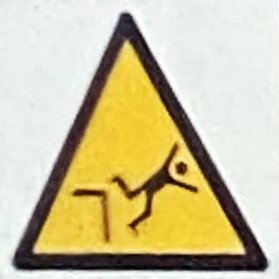
Our cautious cliff-looker has some subtle variations, too.
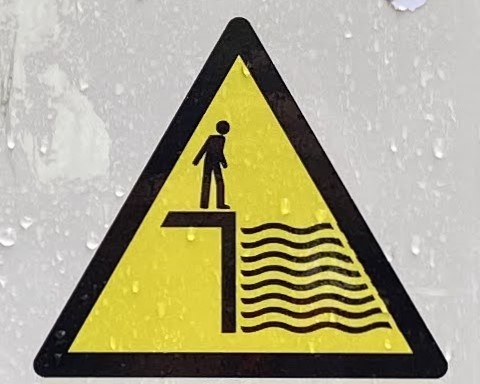
Hovering 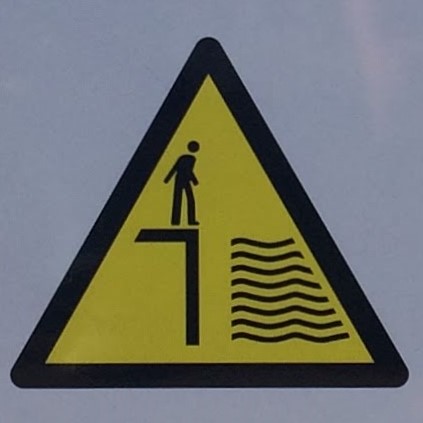
Same but where did the water go? Tsunami incoming? 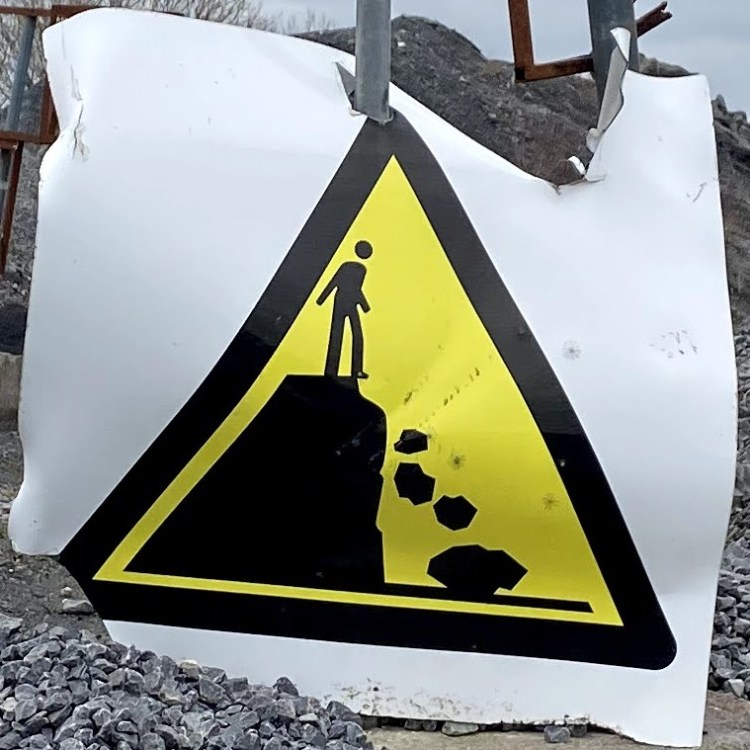
One foot inside the rock 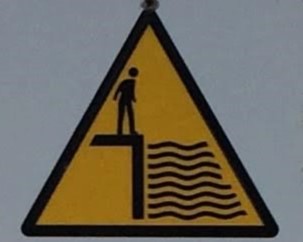
Different shape
This one comes in a long-legged version and a long-armed version:
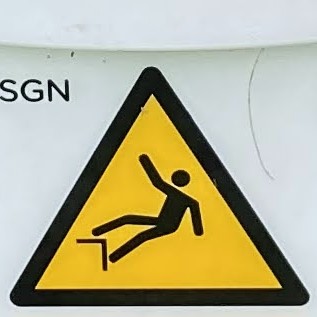
This one treats the head/body connection differently:
Sometimes it’s just color variation, but if you look carefully you might notice that one of the first pair has a little neck, and one of the second pair has a longer leg, pointy knees, and thicker arms.
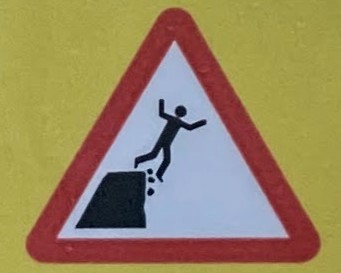
This figure has a left and right facing version, with and without stray rocks. It has a backwards step fall, one detailed with bootheels and a nose and one with just light clothing detail. It’s also one of the ice falls, and you may remember the same figure featured in Trips:
Basic jump 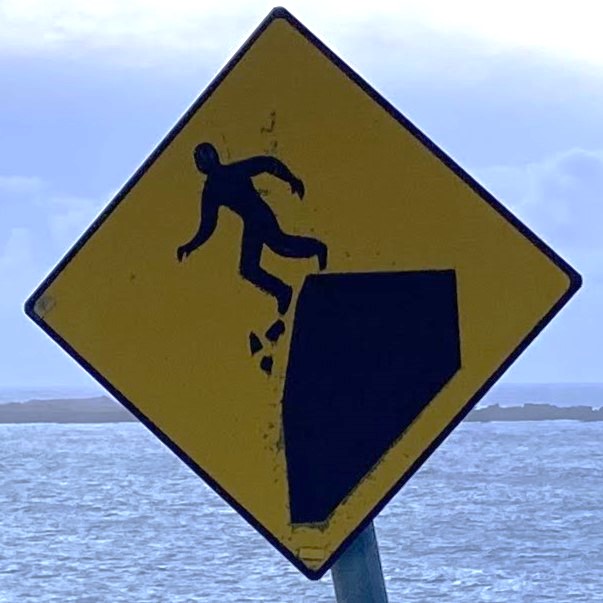
Bonus rocks Nice heels 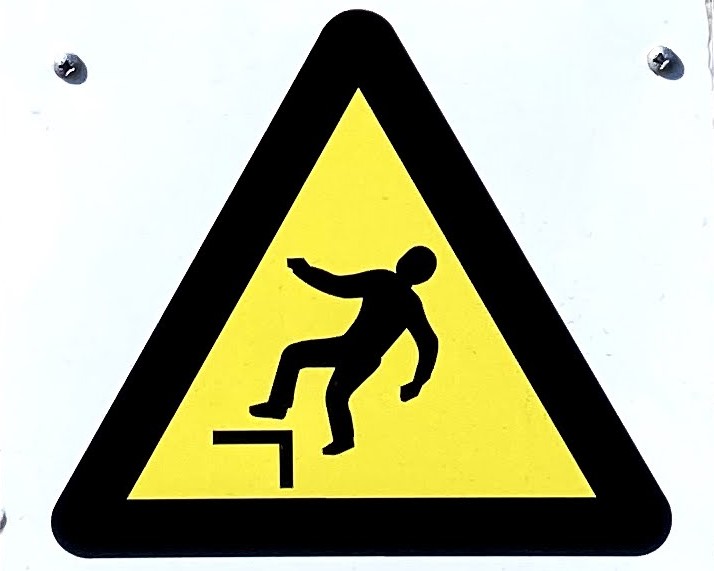
A little simpler 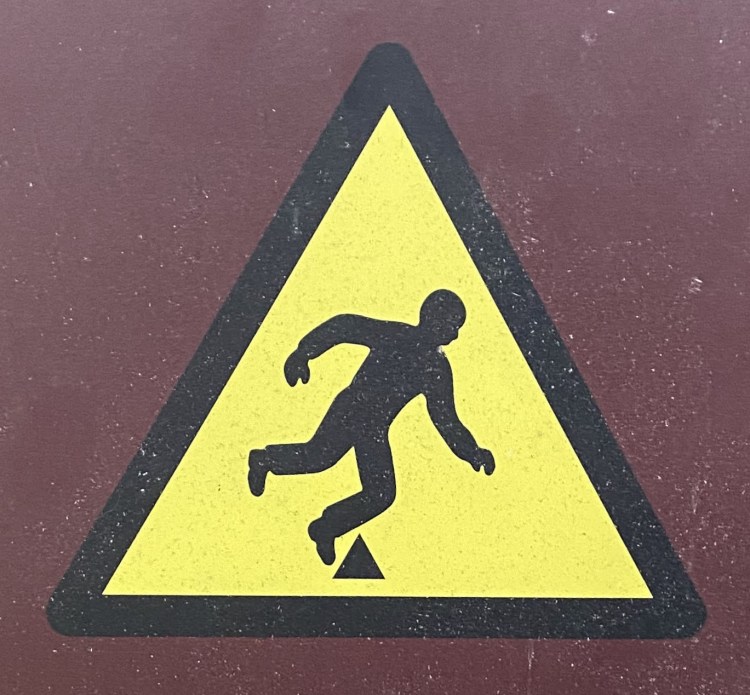
Remember the triangle trip? 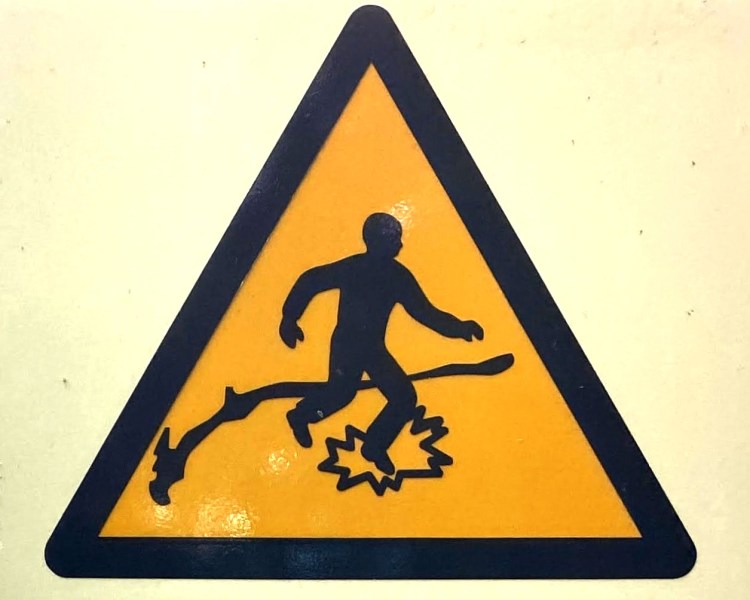
Yay, ice
Orientation variations are always fun. Remember this one?
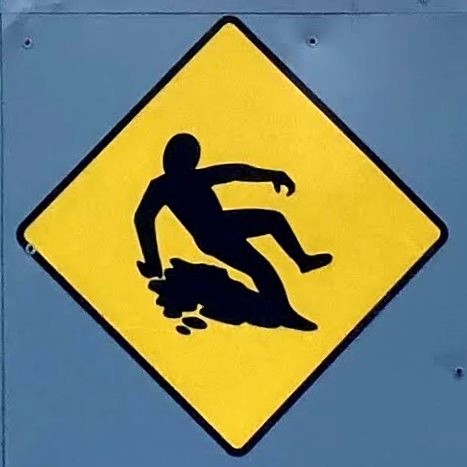
Right side up: slip Upside down: fall Right side up but with cliff: slip/fall
And how about this one?

Forward: trip Upright: fall
Or this one, where the figure doesn’t really change, only the context.
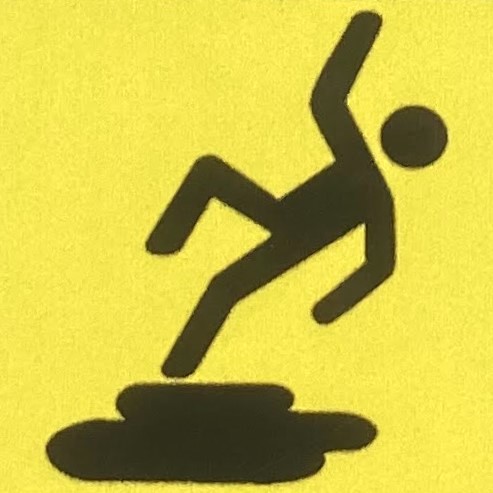
Slipping 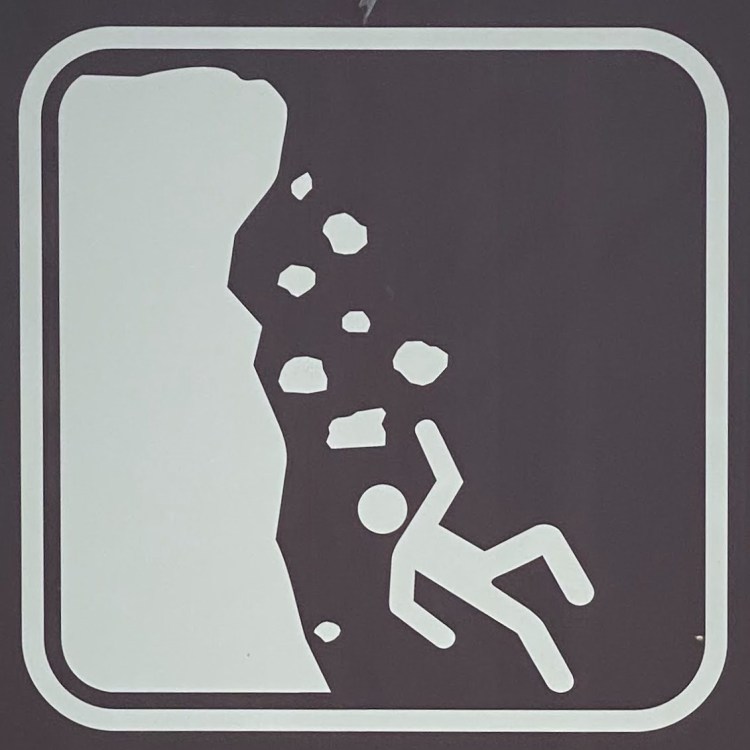
Falling
Lastly, let’s take a look at the impressive variety of falling rocks! They come in so many shapes and sizes.
Pure diamond Semi-precious gemstones Large round boulders Nice shapes 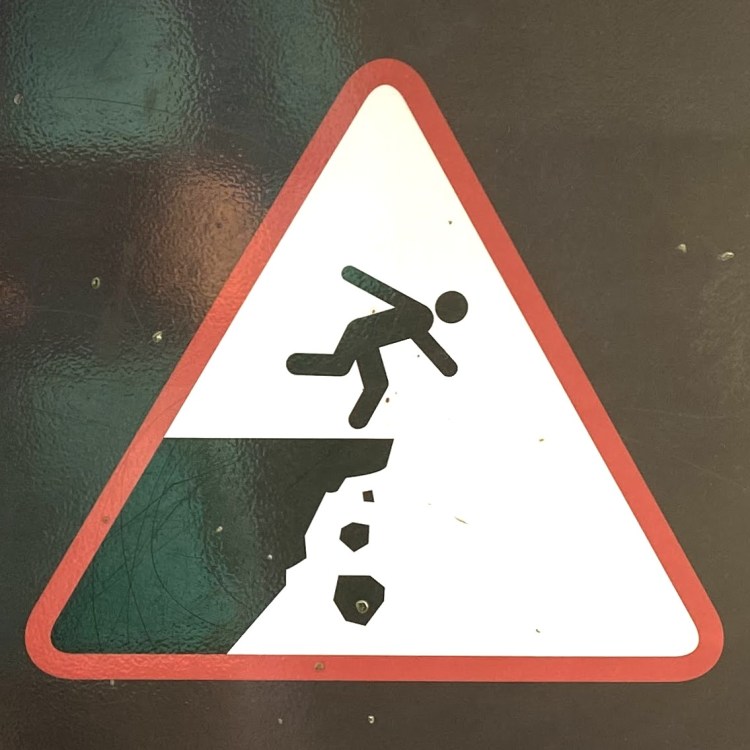
Gravity-based rocks 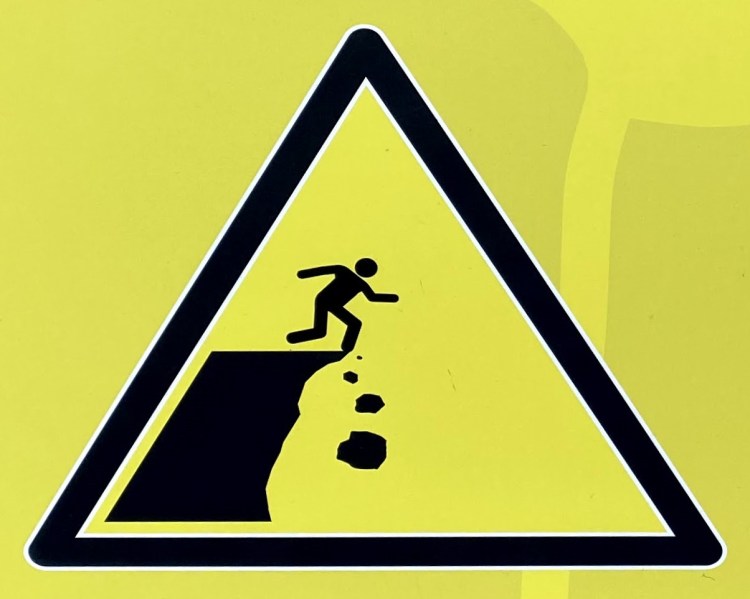
Forward-launched rocks More roundish ones Lots of edges 
Medium gravel Fine gravel Tiny gravel Basic trio of rocks A nice vertical trio Head like a rock Trio, alternate 2, different bottom rock Trio, alternate 1 Shrapnel? Very pointy
That’s all for Falls, at least for now. We’re nowhere near finished with sign figures, though: while Slips, Trips, and Falls are the most common and have the most variety, stay tuned for Drownings, Electrocutions, and even more niche dangers!
 Shastified, Continued